Ablation Helped Some Women — Here’s Why It Didn’t Help Me
Exploring the gap between expectation and reality, and what persistent symptoms after ablation can reveal about deeper conditions like adenomyosis.
ABLATION
4/28/20262 min read
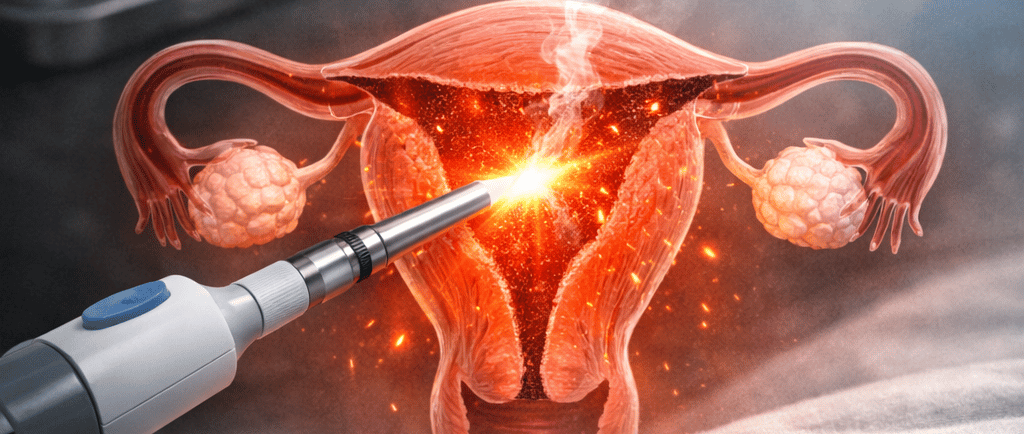
For years, I was told that an ablation paired with an IUD “should work” for my heavy bleeding. I trusted that. Many women do — and for a lot of them, it truly does help. Their periods lighten, their energy returns, and life becomes manageable again.
But there’s another group of us — the ones who don’t get that relief. The ones whose bodies keep whispering (or screaming) that something deeper is going on.
This is my story, and maybe it’s yours too.
When Ablation Helps
Ablation can be a good option for women who:
have heavy bleeding without underlying structural issues
don’t have adenomyosis
want a less invasive option than hysterectomy
respond well to hormonal support like an IUD
For these women, ablation can be life‑changing. And I want to honour that — because women deserve to hear both sides.
When Ablation Doesn’t Help — and Why
For some of us, the symptoms don’t improve. Or they get louder. Or new ones appear.
After my ablation, I started experiencing:
pelvic pressure
nonstop cramps
trapped bleeding sensations
bloating that made me look pregnant
hip pain
nerve buzzing
anxiety before bowel movements
migraines
heaviness and inflammation
IUD falling out
bleeding after removal
vaginal aching
off‑balance sensations
brain fog
forehead pressure
neck/skull‑base pain
None of this made sense at first. Until it did.
What My Symptoms Were Pointing To
Ablation can’t treat adenomyosis.
And that’s what my body was trying to show me.
Adenomyosis often hides behind:
heavy bleeding
enlarged or “boggy” uterus
painful periods
deep pelvic aching
back, hip, or groin pain
nerve symptoms
bloating
fatigue
mood changes
If these symptoms continue after ablation, it’s not failure — it’s information.
Your body isn’t malfunctioning. It’s communicating.
Red Flags to Pay Attention To
If you’ve had an ablation and you’re still struggling, these signs may be worth exploring:
enlarged uterus
fibroids or polyps
IUD issues
hard swelling under ribs
deep lower‑back pain
groin/inner‑thigh pain
nerve buzzing or tingling
pelvic floor soreness
urgency to pee
constipation
mood shifts
fatigue
inflammation
These symptoms don’t diagnose anything — but they do deserve attention.
You’re Not Alone
Ablation helps many women. And for others, it becomes the moment they realize something deeper is happening.
Wherever you fall, your experience is valid.
Your body isn’t a problem to be solved — it’s a story to be heard.
Connect
Reach out for mindful wellness guidance
tania@wellnessmyway.online
© 2026. All rights reserved.