Spotting After Sex:
Because Apparently We Needed One More Thing to Worry About
VAGINAL HEALTH
2/11/20262 min read

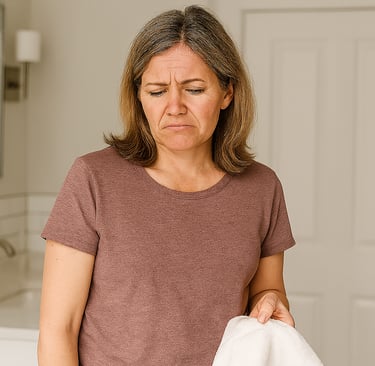
Let’s be honest: being a woman sometimes feels like a never‑ending list of “surprises” our bodies like to throw at us. Hormones acting up? Sure. Random cramps? Why not. And then — just when you think you’re finally having a moment of connection, pleasure, or intimacy — you go to the bathroom afterward and see spotting.
Perfect. Amazing. Exactly what we needed today.
If this has happened to you, you’re not dramatic for feeling confused or worried. Spotting after sex is one of those things no one talks about, yet so many of us experience. And instead of spiraling on Google at midnight, you deserve real, calm, supportive information that actually makes sense.
So let’s break down why spotting happens, what’s normal, and when it’s worth checking in — without the fear‑based tone or the clinical jargon. Just real talk, woman to woman.
Why Spotting Happens After Sex (And Why It’s Usually Not a Crisis)
1. Your Cervix Is Sensitive — Especially During Hormonal Shifts
Perimenopause, postpartum, birth control changes, ovulation… Our hormones love to keep things interesting. A softer, more vascular cervix can bleed with even gentle friction.
2. Vaginal Dryness or Thinning
This one is so common and nobody warns us. Low estrogen, stress, medications, perimenopause — all of these can make the vaginal tissue more delicate, leading to micro‑tears and light spotting.
3. Infections or Imbalances
Sometimes spotting is your body’s way of saying, “Hey, something’s off.” Yeast, BV, STIs, or high vaginal pH can all cause irritation and bleeding.
4. Cervical Polyps
Benign, common, and annoyingly prone to bleeding.
5. Recent Procedures or IUDs
Anything that’s been poking, prodding, or adjusting your cervix can make spotting more likely.
When It’s Normal vs. When to Check In
Totally Normal:
Light pink or brown spotting
Happens occasionally
No pain
You recently ovulated
You’re in perimenopause
You’ve had dryness or irritation
Worth Checking:
Bright red or heavier bleeding
It happens every time
Pelvic pain
Strong odor or unusual discharge
You’re postmenopausal
Something just feels “off”
Your intuition is a real tool — trust it.
How to Reduce Spotting After Sex
Use lubrication (seriously, it’s a game changer)
Slow down and allow more arousal time
Support vaginal tissue health
Address hormonal shifts
Treat infections promptly
The Bottom Line
Spotting after sex is common, and most of the time, it’s not a sign of anything dangerous. But your peace of mind matters. You deserve to understand your body without fear, shame, or confusion — and you deserve answers that feel human, not clinical.
Your body is always communicating with you. You’re not alone in this. And you’re not “too much” for wanting clarity.
Connect
Reach out for mindful wellness guidance
tania@wellnessmyway.online
© 2026. All rights reserved.