Vaginal Dryness and Feeling “Always Wet”:
Two Opposite Midlife Realities No One Talks About
VAGINAL HEALTH
2/11/20262 min read
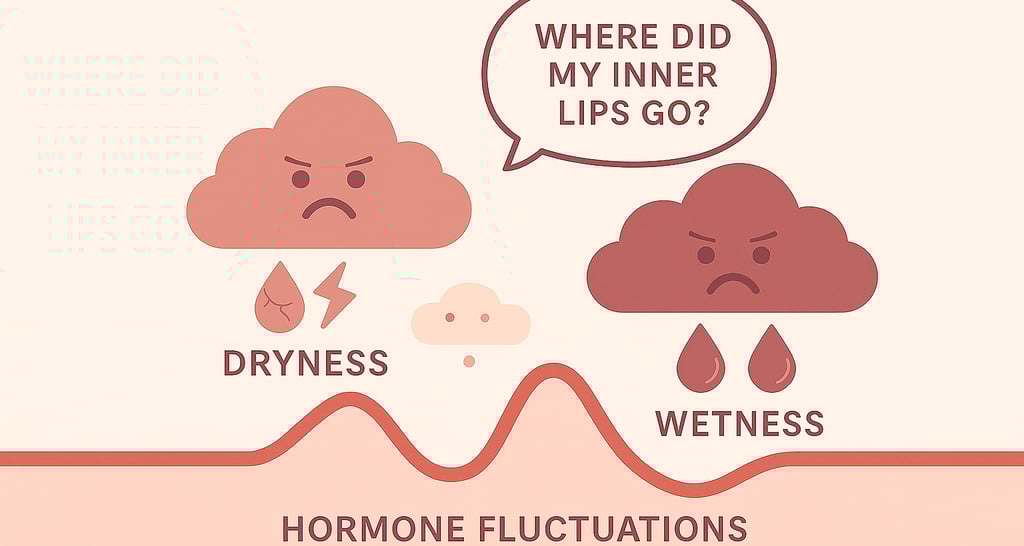
If there’s one thing midlife loves to do, it’s surprise us. One day you’re dry as the Sahara, the next you’re wondering if you accidentally sat in a puddle. And the best part? No one warned us about either of these things.
Everyone talks about vaginal dryness — it’s practically the mascot of perimenopause. But what about the women who feel constantly wet? Or slippery? Or like their underwear is never fully dry?
Yep. That’s a thing too.
And both experiences are completely normal.
Let’s break this down in a way that feels honest, supportive, and actually helpful.
Vaginal Dryness: The Classic Midlife Plot Twist
Vaginal dryness is incredibly common, especially as estrogen starts dipping and rising like a hormonal roller coaster. When estrogen drops, the vaginal tissue becomes thinner, less elastic, and less naturally lubricated.
Common reasons for dryness
Low estrogen
Stress
Certain medications
Dehydration
Hormonal birth control
Overwashing or scented products
How dryness feels
Burning
Itching
Pain with sex
Micro‑tears
Spotting afterward
A general “tight” or “sandpaper” feeling
Dryness can be frustrating, uncomfortable, and honestly… rude. But it’s also extremely common.
Feeling “Always Wet”: The Opposite But Equally Real Experience
Now let’s talk about the other side — the women who feel like they’re always wet. This is way more common than people think, but it’s rarely discussed because everyone assumes dryness is the only issue.
Why you might feel constantly wet
Hormonal swings
Cervical mucus changes
Overactive Bartholin’s glands
Increased pelvic blood flow
Microbiome shifts
Ovulation-like mucus showing up at random times
How “wetness” feels
Damp underwear
Moisture without arousal
A feeling of “leaking” (but it’s not urine)
More discharge than usual
A constant need to wipe or change underwear
If there’s no itching, burning, odor, or pain, this is usually just your body doing its thing.
Can You Swing Between Dry and Wet? Absolutely.
Perimenopause is basically puberty in reverse. Your hormones are unpredictable. Your cervical mucus is unpredictable. Your vaginal tissue is unpredictable.
Dry, wet, sensitive, shrinking… even the inner lips (the labia minora) get in on the midlife chaos. Honestly, nothing is off‑limits when hormones are involved.
And if you’ve ever wondered, “Is this normal?” the answer is probably yes. If you’ve ever wondered, “Why is this happening?” the answer is hormones. And if you’ve ever wondered, “Where did my inner lips go?”… welcome to the club.
So yes — you can be dry one week and overly wet the next. Annoying? Yes. Normal? Also yes.
When Either One Is Worth Checking In
It’s a good idea to talk to a healthcare provider if you notice:
Strong odor
Itching or burning
Pain during sex
Sudden, dramatic changes
Bleeding that doesn’t make sense
Discharge that’s green, gray, or chunky
What You Can Do (Supportive, Non-Medical Options)
For Dryness
Use a clean, body-safe lubricant
Avoid scented products
Stay hydrated
Support estrogen naturally through nutrition
Prioritize arousal and slower intimacy
For Feeling “Always Wet”
Cotton underwear
Avoid daily panty liners
Breathable clothing
Track patterns
Support vaginal pH and microbiome
The Bottom Line
Your vaginal health is not one-size-fits-all. Some women dry out. Some women feel constantly wet. Some bounce between the two like a hormonal ping‑pong ball.
None of it means something is wrong with you.
Your body is communicating — and you deserve to understand it without shame, confusion, or silence.
Connect
Reach out for mindful wellness guidance
tania@wellnessmyway.online
© 2026. All rights reserved.